On-demand fashion
Frequent art changes, short runs, dark garments, and color consistency across replenishment orders.

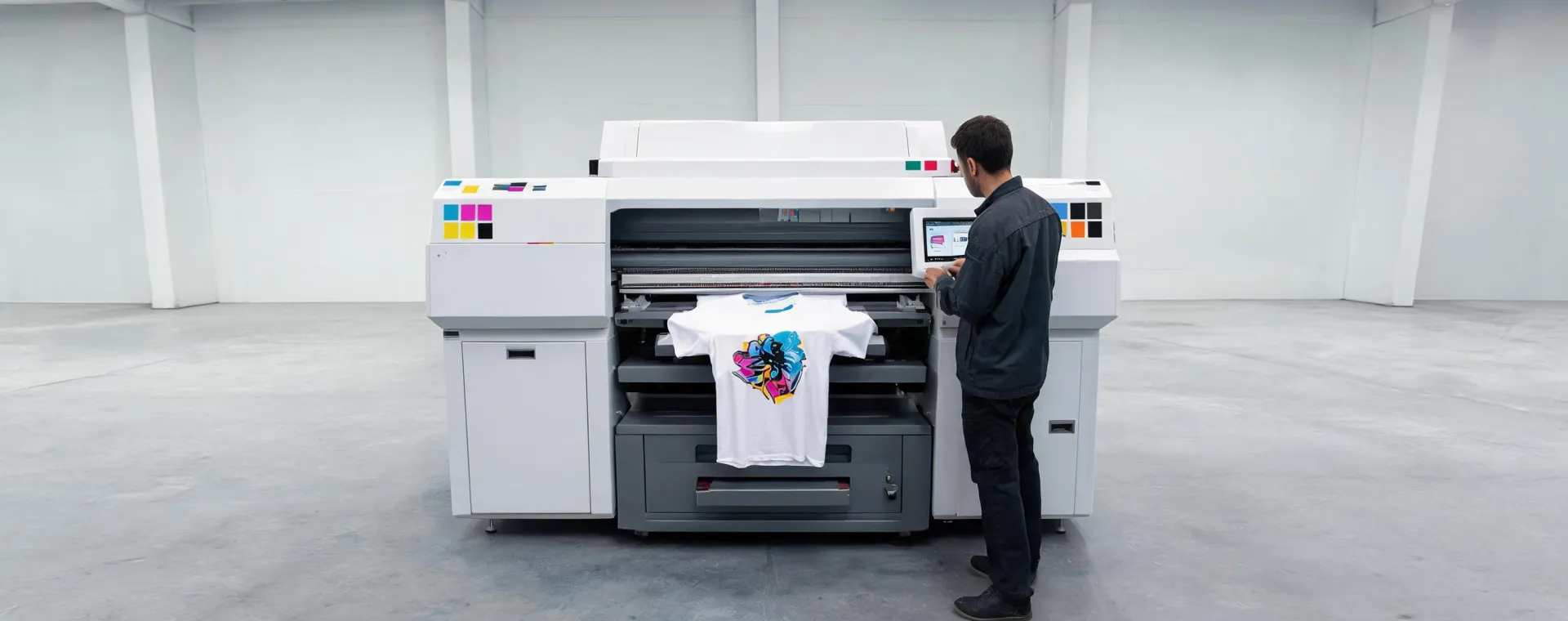
Evaluate DTG and DTF routes through substrate behavior, pretreatment strategy, curing demand, operator flow, and repeatable output—not headline speed alone.
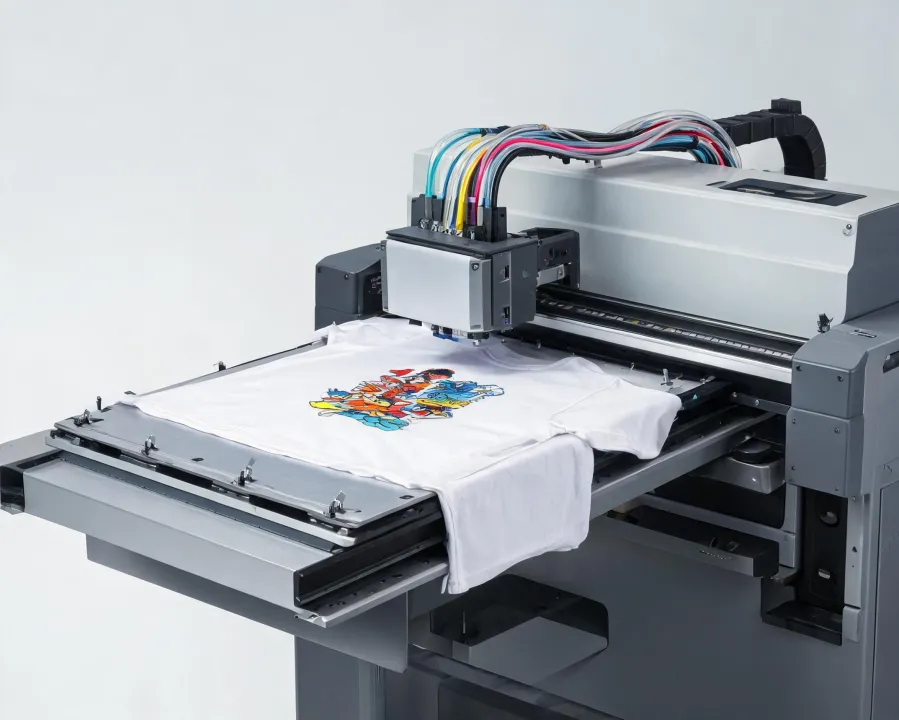
Confirm fiber blend, dye migration risk, hand-feel target, and wash requirement before locking artwork or ink laydown.
Document coat weight, drying condition, humidity, and dwell time so white ink adhesion is evaluated under repeatable conditions.
Validate press temperature at the garment surface, not only the controller setpoint, then record time and pressure with the approved recipe.
Translate color targets, maintenance intervals, and rejection criteria into a shift checklist that production teams can audit.
Published product data is the starting point. Final settings depend on artwork coverage, garment chemistry, environment, and the selected curing route.
Frequent art changes, short runs, dark garments, and color consistency across replenishment orders.
Approval-controlled color, audit trails, repeat graphics, and defined wash-performance protocols.
Automated job intake, barcode discipline, exception handling, and predictable pack-out timing.
Film handling, powder and cure coordination, transfer settings, and shelf-life verification.
variables in every wash-test record
facility conditions logged at trial start
production routes compared: DTG and DTF
signed acceptance protocol per application
Share the actual fabric, artwork, planned run length, target color tolerance, curing equipment, and expected wash protocol. The resulting brief can separate machine capability from process variables and facility assumptions.