State the boundary
Output varies with mode, artwork, garment, environment, maintenance, and operator practice.

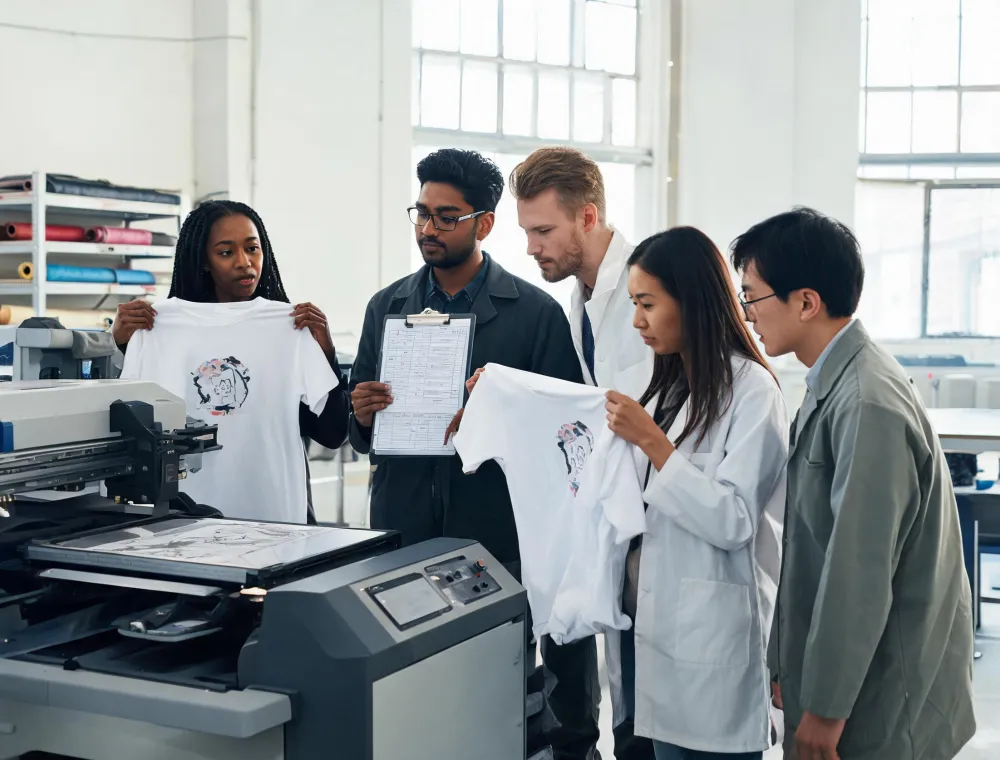
This site presents Kornit as a print-system evaluation subject, not as a source of universal performance promises. The practical story starts where artwork, fabric chemistry, ink, pretreatment, curing, software, maintenance, and operator work meet. Buyers deserve to know which claims can be checked during a representative trial and which outcomes remain conditional.
A garment print cell is a chain of conversions. A digital file becomes an ink deposit; the deposit interacts with a pretreated textile; heat and pressure establish the final film; washing exposes whether adhesion and color were durable under the selected protocol. A machine brochure can describe configuration and nominal modes, but it cannot predict every fabric lot, artwork coverage, facility climate, or operator sequence.
That is why our editorial approach separates disclosed configuration from test evidence. A buyer comparing a Kornit DTG route with a DTF transfer route should document what moves with the job: garment handling, white layer, color target, cure route, labor touchpoints, consumable waste, rework, and downstream finishing. The faster-looking route on one artwork may not be the most economical route across a mixed order queue.
No named customer outcome is presented here because the provided brand assets contain no verified case archive. Instead, claims are framed as testable procedures: print a representative file, log the recipe, condition the sample, perform the agreed wash cycle, measure or visually grade the result under a controlled illuminant, and repeat when a material or process variable changes.
Output varies with mode, artwork, garment, environment, maintenance, and operator practice.
White ink, pretreatment, cure, and color settings need versioned production records.
Wash, abrasion, stretch, and hand feel must match the buyer’s actual acceptance method.
Loading, unloading, changeover, cleaning, exception handling, and pack-out belong in the model.
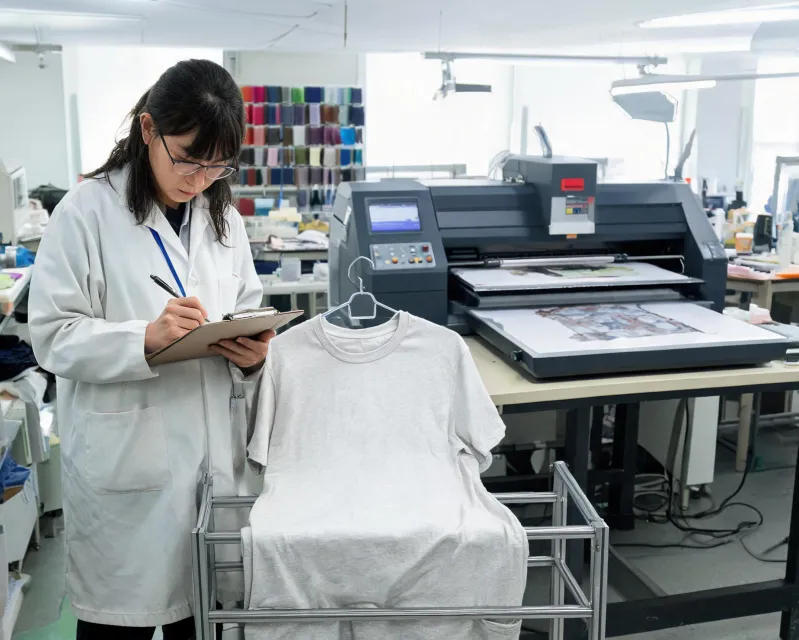
Digital printing changes work rather than removing it. Production teams still need training in garment inspection, nozzle checks, pretreatment consistency, color approval, curing measurement, cleaning, waste segregation, and exception handling. A rollout plan should define who owns each record and when a recipe may be changed.
Facility fit also creates boundaries. Humidity outside the qualified range can affect jetting and textile behavior. Dark garments with unstable dyes can show migration. Heavy ink coverage can change hand feel and curing demand. Pretreatment can leave visible marks on some fabrics. Transfer films, powders, and presses introduce their own handling and ventilation requirements. These conditions should be screened before a commercial commitment.
The sound next step is modest: select representative jobs, agree on test methods, observe the complete operator cycle, and retain approved references. That gives finance, production, creative, and service teams the same evidence set for a decision.
Describe your fabric mix, order pattern, curing setup, quality test, and staffing model. We will turn the unknowns into a structured evaluation brief.